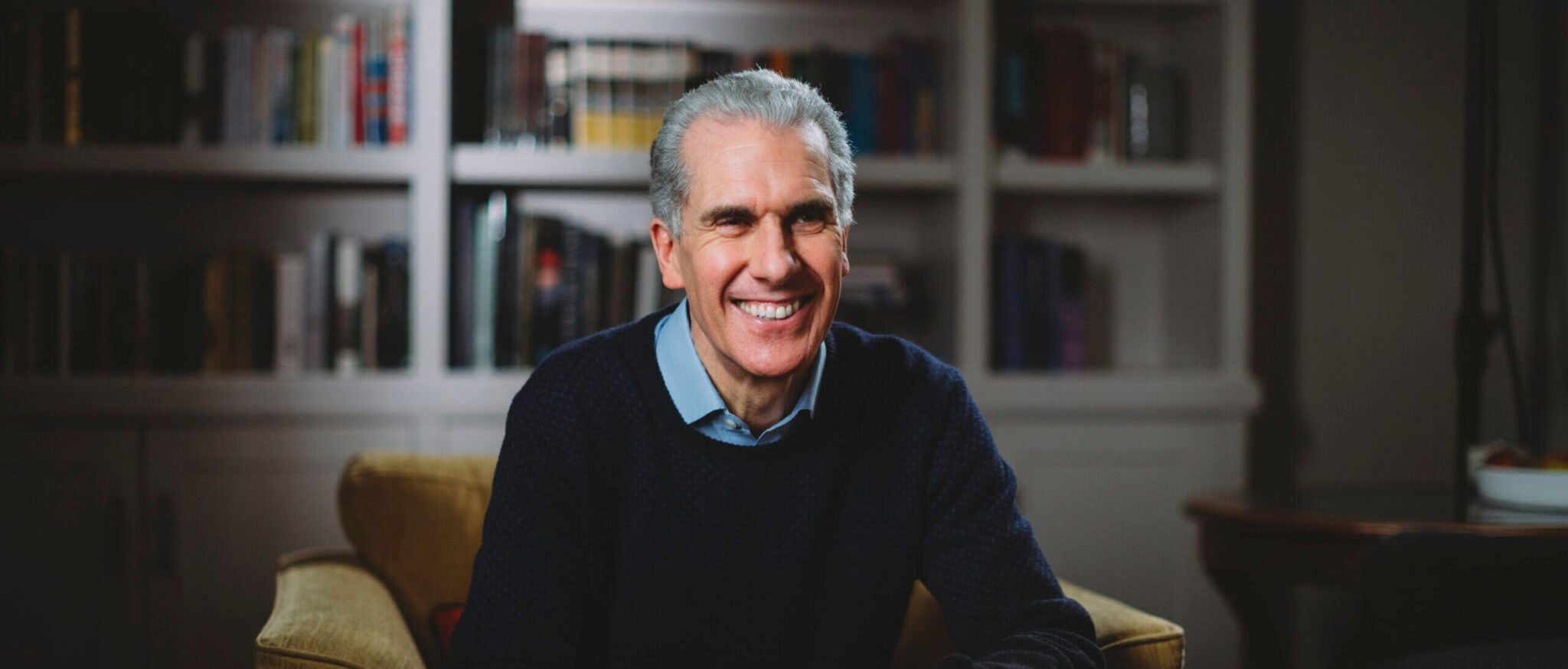
Crossing continents, cultures and even political regimes, for more than 35 years, the Alpha Course has reached tens of millions of people all over the world. It has changed the lives of many who encounter Jesus and come to faith. Nicky Gumbel, the developer and leader of Alpha, shares the roots of this extraordinary success and grace. What are modern people most desperate for today, and what can Alpha offer to the modern world?
You have previously shared in one interview that while the message of the Gospel remains timeless, the “cultural packaging” must evolve to reach today’s world – particularly younger generations. Could you elaborate on that? In your view, what are the essential elements of effective cultural packaging these days?
St. Paul writes, “The Gospel is the power of God to salvation for everyone who has faith” (Romans 1:16). The message is here, and we can’t change it. Otherwise, it loses power. Some people try to change the message. They say: “young people today can’t accept the message of the cross and resurrection of Jesus”.
There are also a lot of people who change the message, but they leave the packaging the same. That’s a double blow. If you don’t change the package, then people aren’t going to hear anything anyway. Every generation has changed the packaging – the music, the way that we present the Gospel.
What we have done with Alpha is to try to do exactly that. This generation doesn’t want to be preached at; they want to be listened to. What do young people like? They like eating together. That’s the New Testament – Jesus ate with his disciples. In Alpha, you come for a meal. Then you watch a 25-minute film (again, that’s what people do). They watch things on YouTube, on their phones… We try to make the Alpha film series very fast-moving. There’s never anything on screen for longer than 10 seconds. It’s appealing to that mindset. Then you go into a discussion group where people are listened to. The Alpha small groups are based on Proverbs 20:5, which says that in the heart of every person is a deep well, and the wise person draws it out. In other words, the task of the host is not to preach again. We proclaim the Gospel in the film, but then we listen to the guest, asking questions that will pour out the gold that is in every human heart. Right from the start of his ministry, Jesus was in the temple asking questions, listening, and that’s what he did throughout his ministry. He said, “What do you think?” For example, during the Alpha, when the talk is on the cross, the question is: “Has anybody here ever needed to forgive someone?” Then the second question is: “Has anybody here ever needed to ask forgiveness?” You have fascinating discussions around these subjects. No one’s gone through life without needing to forgive someone or ask forgiveness. And then the third question would be: “What do you think about the idea of God forgiving?” During these discussions, you get to know each other, and you draw out the deep well that is in every human heart.
Alpha is over 10 sessions, it’s very low-key, unthreatening, unpressurised. It’s not intense. It’s a fun way to explore the big questions of life. Why am I here? What’s my purpose? Is there any meaning to life? What happens when I die? The Gospel is Good News, but we need to find a good way of proclaiming it. That’s what I mean by presenting the unchanging message of the Gospel in a way that is the packaging that works with Generation X, the millennials, and now the new generation – Generation Alpha. The Alpha Course is one attempt (but not the only one) to change the packaging.
Alpha became one of the most successful evangelization initiatives worldwide. How did this project begin, and at what point did you realise that leading it was your specific missionand vocation?
I wasn’t a Christian. My father was a German Jew, and he was a refugee in this country [United Kingdom], but not a church- goer. My mother didn’t go to church. I became an atheist when I was a teenager. When I was at age 18, in my first year at Cambridge University, I read this book [shows the book], the New Testament. Jesus said: “I came that you might have life and life in all its fullness” (John 10:10). Looking back, I realised that there are many injustices in the world, but the greatest injustice is for someone to go through the whole of their life and never to have heard about Jesus. The greatest act of love is to introduce someone to Jesus. I tried many different ways, and most of them were either unsuccessful or counterproductive. It was sort of like going out on the street with a questionnaire. “What did you have for breakfast?” And then the last question: “Would you like to ask Jesus into your life?” Knocking on people’s doors, people thought you were the Jehovah’s Witnesses. It was just lots of ways that didn’t work.
Then I stumbled on Alpha. It was already in existence. I didn’t come up with it, but we adjusted it to make it easier for people outside the church to come to. Then it took off. I’m not committed to Alpha, but I am committed to finding ways to introduce people to Jesus. I always say, “If I find a better way, I’ll drop Alpha and do the better way”. Last time we ran Alpha in our home with my daughter and son-in-law. So many people’s lives were changed. It still works. Over 30 million people have done the course, and it’s in every part of the body of Christ. We hear stories all the time of people coming to faith. I get emails, letters from people whose lives have been changed. So, we’ll keep running it. Our aim now is to make it available to everyone on the planet by the 2000th anniversary of the Resurrection of Jesus. Pope Francis opened our Leadership Conference by video, talking about the 2033 vision. I know that the Catholic Church is very involved in it. The Bible translators are all working to make the New Testament available in every language. Our part is to try to make Alpha available to everyone on the planet by Easter Day 2033.
Continue reading on Ateitis.lt