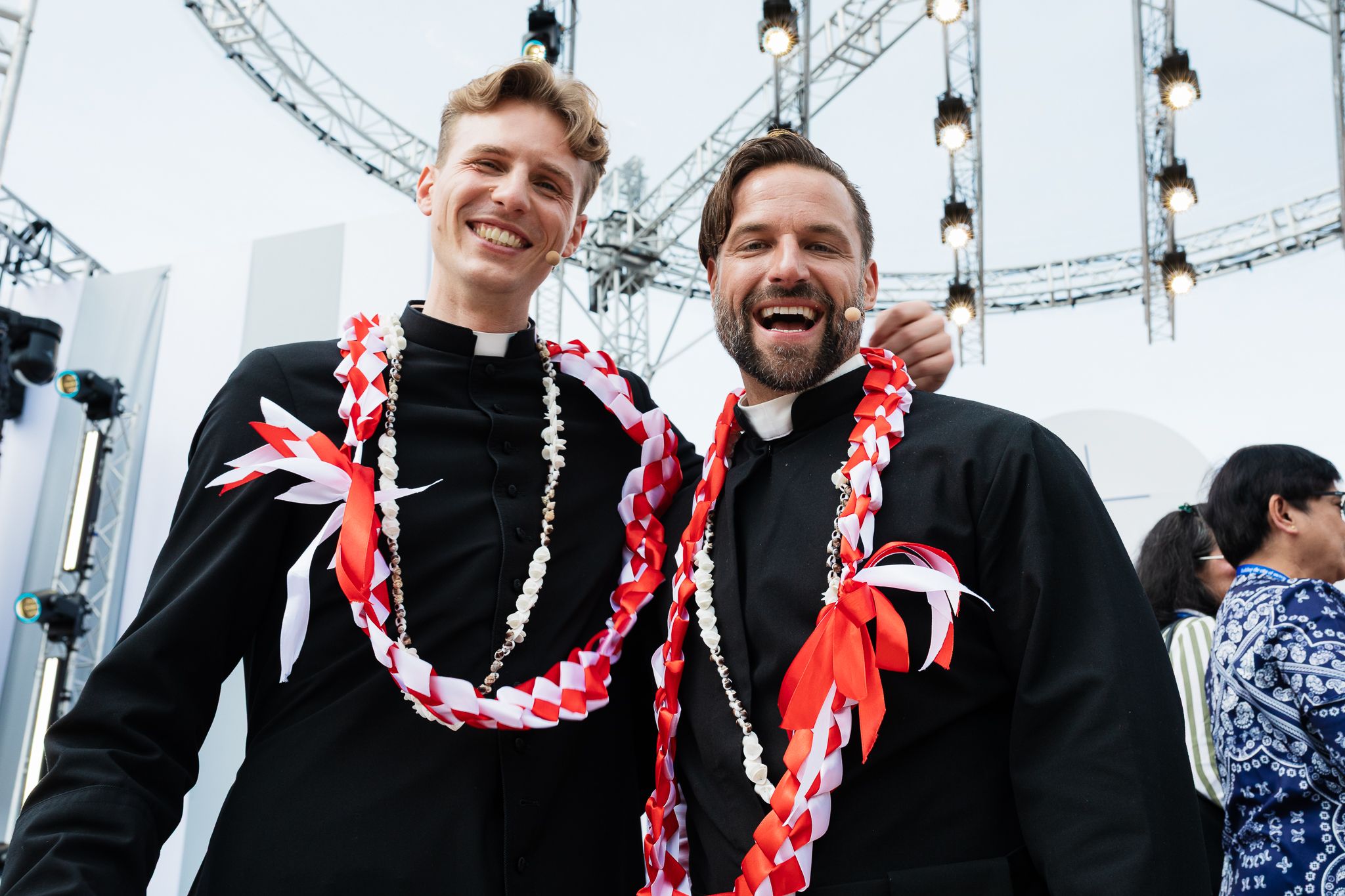
The fifth day of the 6th World Apostolic Congress on Mercy in Vilnius focused on a simple but demanding theme: Action. Participants were invited not only to reflect on mercy as a spiritual concept, but also to explore how it can be lived out in concrete ways: in personal life, parish communities, social service, the justice system, humanitarian work, and the defense of human dignity.
Throughout the day, speakers from remarkably different backgrounds offered a common message: mercy is not merely an emotion or an idea. It becomes real only when it takes visible form in service to others.
Among the speakers were Archbishop Rino Fisichella, Tetiana Stawnychy, David and Catherine Mackie, Fr. James Mallon, and Kevin Hyland.
Mercy: The True Name of God’s Omnipotence
Archbishop Rino Fisichella, Pro-Prefect of the Dicastery for Evangelization and one of the Church’s leading theologians, invited participants to rediscover mercy as the very heart of Christian faith.
Quoting St. John Paul II, he reminded the audience that mercy is not simply one attribute of God among many, but the fullest expression of God's power:
“The Lord redeems us from pain by instilling hope. He converts our hardened hearts by transforming power into service, revealing the true name of His omnipotence: mercy. It is mercy that saves the world.”
The archbishop emphasized that the Church today is called to be “a sign and instrument of the Father’s mercy,” particularly in a world marked by conflict, uncertainty, and profound cultural change.
Drawing attention to the liturgy, he noted that mercy permeates every celebration of the Church, appearing repeatedly in prayers and sacramental life. “Mercy is far from being a mere sentiment,” he said. “It is the backbone of liturgical prayer.”
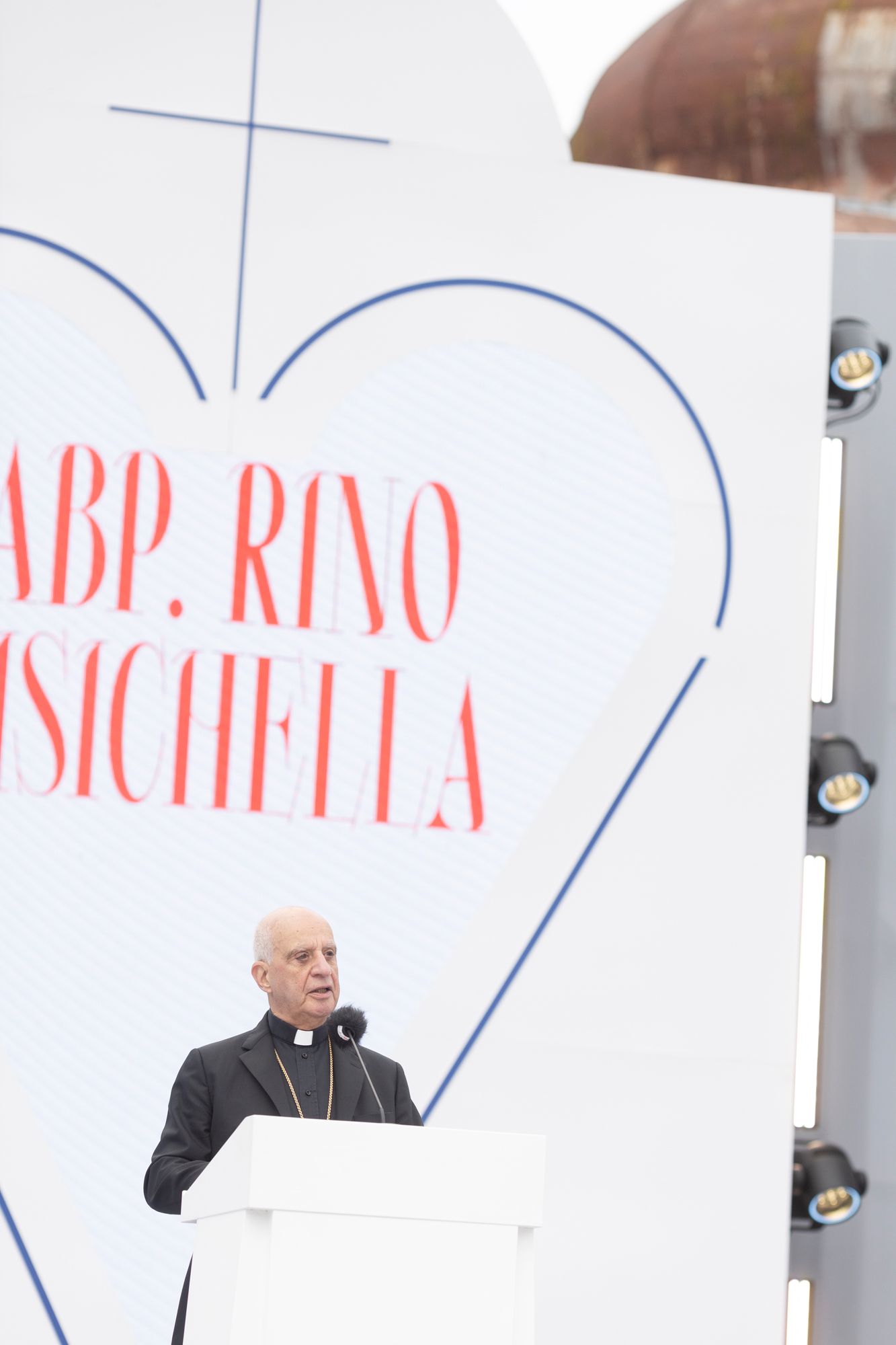
D. Morozovos nuotr.
In the second part of his address, Archbishop Fisichella focused on mercy in everyday life. Echoing Pope Francis, he recalled the Holy Father’s oft-repeated challenge:
“Wherever there are Christians, everyone should find an oasis of mercy.”
Mercy, he argued, is not about sharing what remains from abundance but about sharing oneself and entering into the weakness of another. “Mercy is not an abstract word,” he said. “It is an act, an action, a concrete sign that changes deeply the lives of persons and relationships.”
Ukraine’s Witness: Solidarity Helps Us Remain Human
Tetiana Stawnychy, President of Caritas Ukraine, offered a powerful testimony from a nation living through war.
Reflecting on a conversation she had shortly before Russia’s full-scale invasion in 2022, she recalled how Major Archbishop Sviatoslav Shevchuk spoke not about political truths but about the deeper truth of the human person.
“We're created in the image of God,” she said. “At the very core of our being, we're created for communion. And we find ourselves in the best way when we become a gift to another.”
That conviction became a lifeline during the war.
Stawnychy explained that while humanitarian aid remains essential, some of the most important moments occur simply through human encounter. Caritas workers discovered that the first opportunity for displaced people to tell their story often became the beginning of healing.
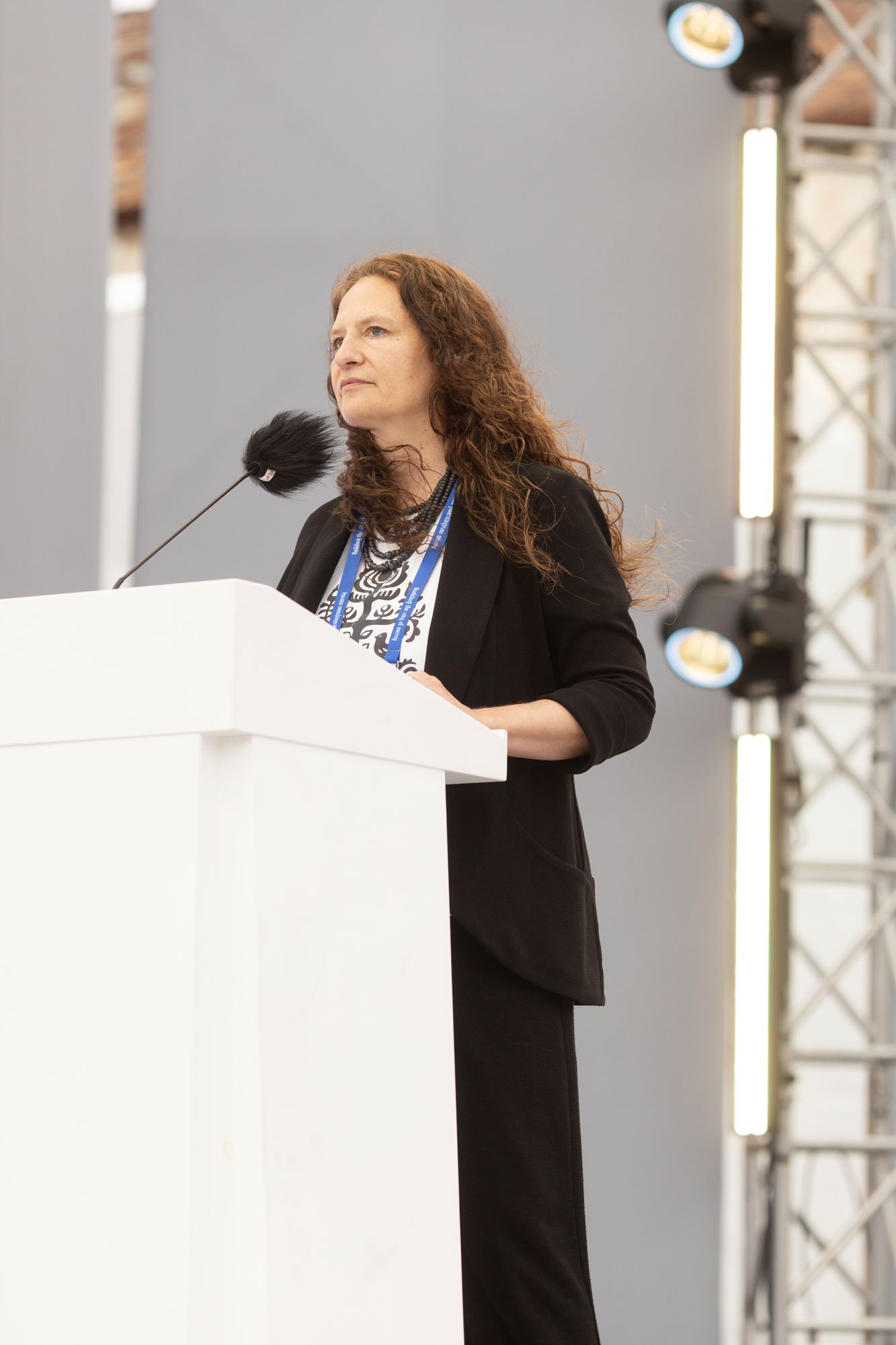
D. Morozovos nuotr.
“This first moment of being able to share your story with somebody who's listening on the other side,” she said, “is that first moment of deep healing.”
She also described how those receiving assistance frequently became volunteers themselves. In 2022, nearly 40 percent of Caritas volunteers in Ukraine were internally displaced people.
One such volunteer was Oksana, who was displaced twice: first from Donetsk in 2014 and later from Mariupol after the full-scale invasion. Reflecting on her experience, Oksana shared:
“Every time I would reach out and was given the opportunity to help another person, it was like a piece of my heart was being stitched back together.”
Stawnychy thanked the international community for its support and stressed that Ukraine’s resilience has been sustained not only by God’s grace but also by global solidarity.
“War is not just a political or military crisis,” she said. “It is a spiritual one.”
Summarizing Ukraine’s experience, she added:
“Our solidarity with you, our desire to reach out, to create communion, create space, create relationship, is what keeps us anchored. We found for us, this holding on to being human is like a life raft in an ocean.”
Mercy Within the Justice System
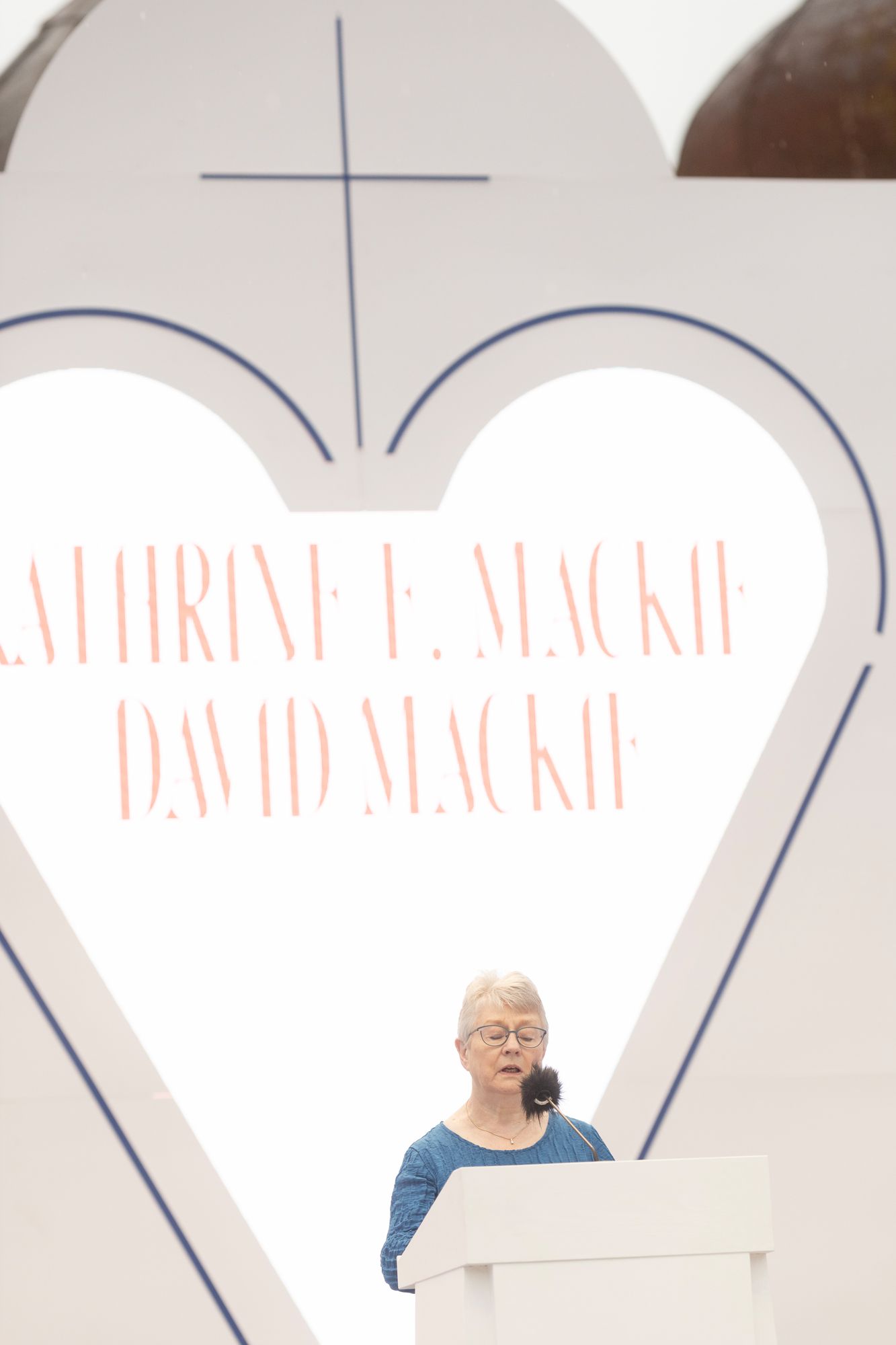
David and Catherine Mackie, long-serving judges in Scotland, explored how mercy can transform criminal justice.
David Mackie explained that many offenders come from backgrounds marked by poverty, abuse, addiction, family breakdown, and adverse childhood experiences. Over the years, he came to recognize that many people appearing before the court did not primarily need punishment.
“It was an anathema that in many cases what was needed by the person I was sentencing was help and support, not a prison punishment.”
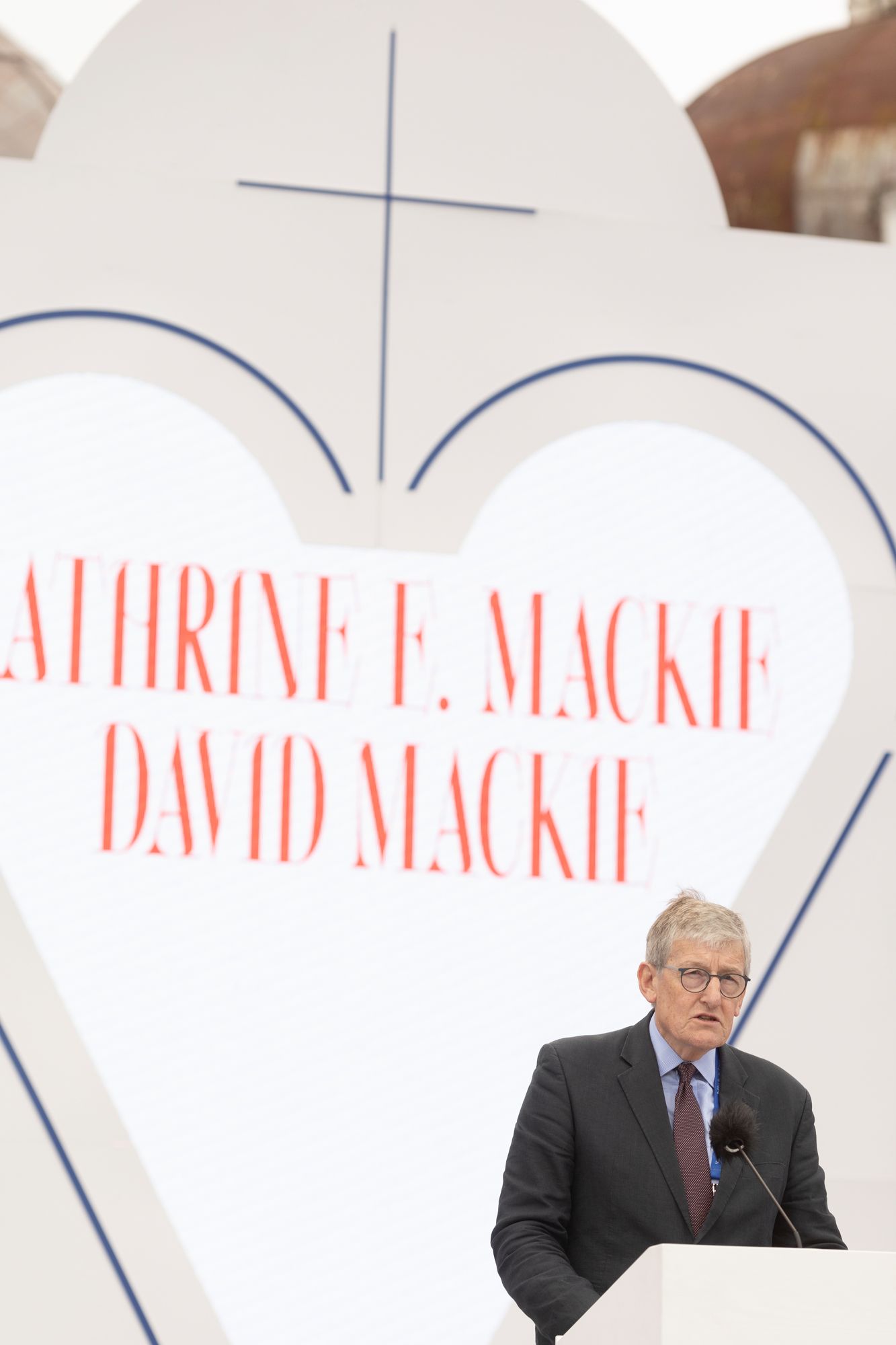
D. Morozovos nuotr.
Drawing on research and judicial experience, he argued that community-based sentences often produce better outcomes than short prison terms, which frequently increase the likelihood of reoffending.
For Mackie, the success of restorative justice depends above all on relationships built on trust. He emphasized that judges can help foster hope and human dignity by engaging with offenders not merely as cases but as persons.
“Every individual, no matter their past, retains an inherent human dignity and intrinsic worth.”
D. Morozovos nuotr.
His wife, Catherine Mackie, illustrated these principles through real-life examples, including the story of Alba, a young woman whose life had been shattered by loss, abuse, addiction, and trauma.
Instead of imprisonment, Alba received an intensive community sentence combined with close support and regular judicial review. Over time, she rebuilt her life, returned to work, secured housing, and regained confidence.
At one of their final meetings, Alba made a striking observation:
“The only people she felt had listened to her was a police officer dealing with the stalker, her supervising social worker, and the court.”
For the Mackies, mercy within the justice system is not weakness. It is confidence in the human capacity for change and redemption.
A Parish That Reflects the Father’s Heart
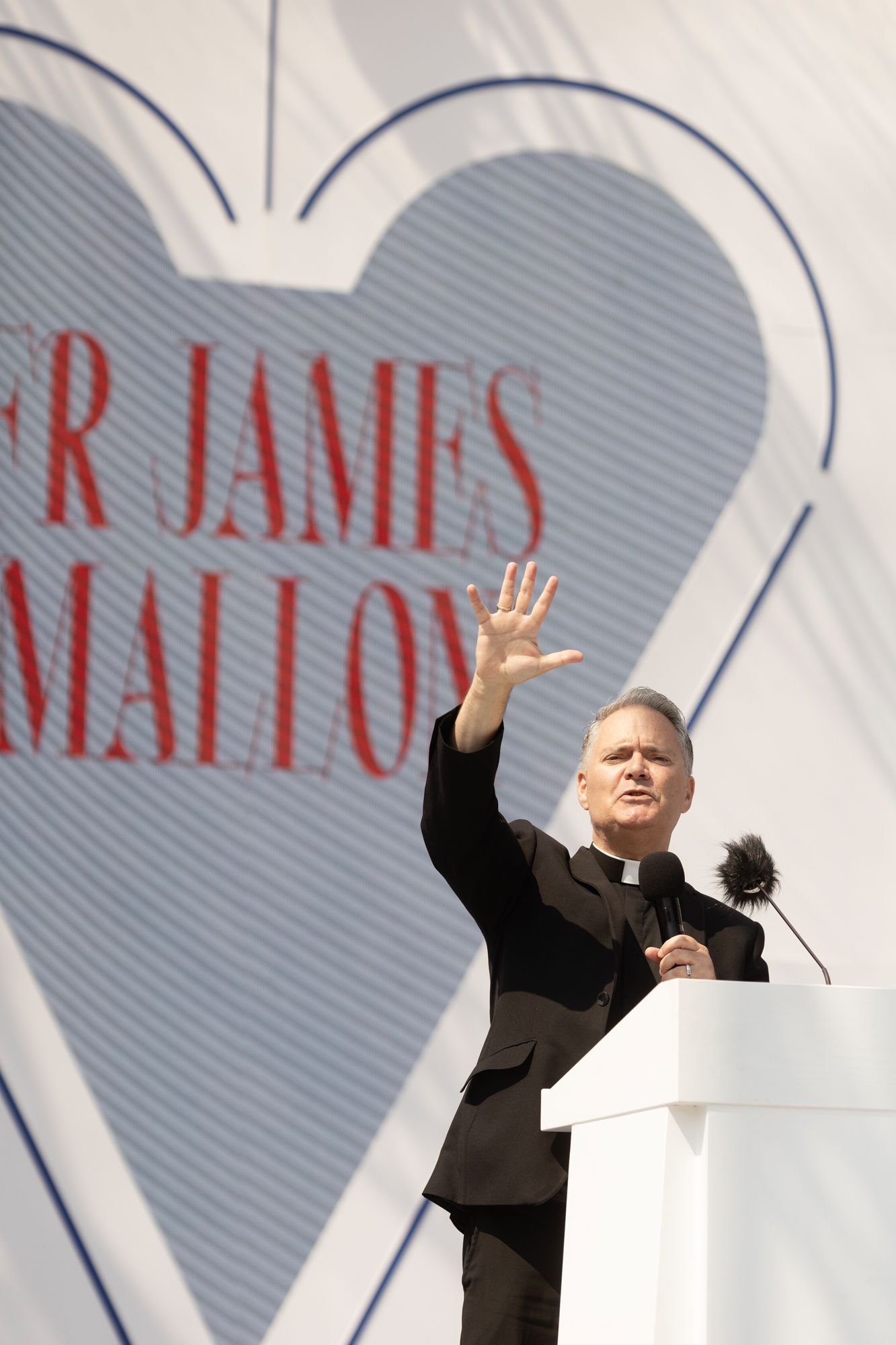
Fr. James Mallon, founder of Divine Renovation, spoke about parish renewal and the need for churches to become living signs of God’s mercy.
He challenged participants to consider a fundamental question: Is parish renewal about what we want from people, or what we want for people?
“It's rooted in love,” he said. “We want people to experience the mercy of God not because of what we can get from them, but what we want for them.”
D. Morozovos nuotr.
Using the parable of the Prodigal Son, Fr. Mallon outlined ten characteristics of the merciful Father that should shape parish culture.
The Father, he explained, is outward-looking, vigilant, compassionate, active, forgiving, generous, urgent, and joyful. Most importantly, he celebrates the return of those who have been lost.
“The Father goes to the son,” Mallon said. “We are called to be parishes that go out, actively.”
He stressed that parish renewal is not primarily about programs or strategies.
“The most important thing is transforming the culture.”
Healthy parish cultures, he argued, celebrate stories of conversion and transformation. Communities become what they celebrate.
Concluding with the testimony of a parishioner named Jen, who rediscovered faith after years away from the Church, Mallon highlighted a simple but profound truth:
“I know that God loves me, although that was a really tough one to accept.”
According to Mallon, every parish should become a place where people encounter that same merciful love.
Fighting Human Trafficking as a Defense of Human Dignity
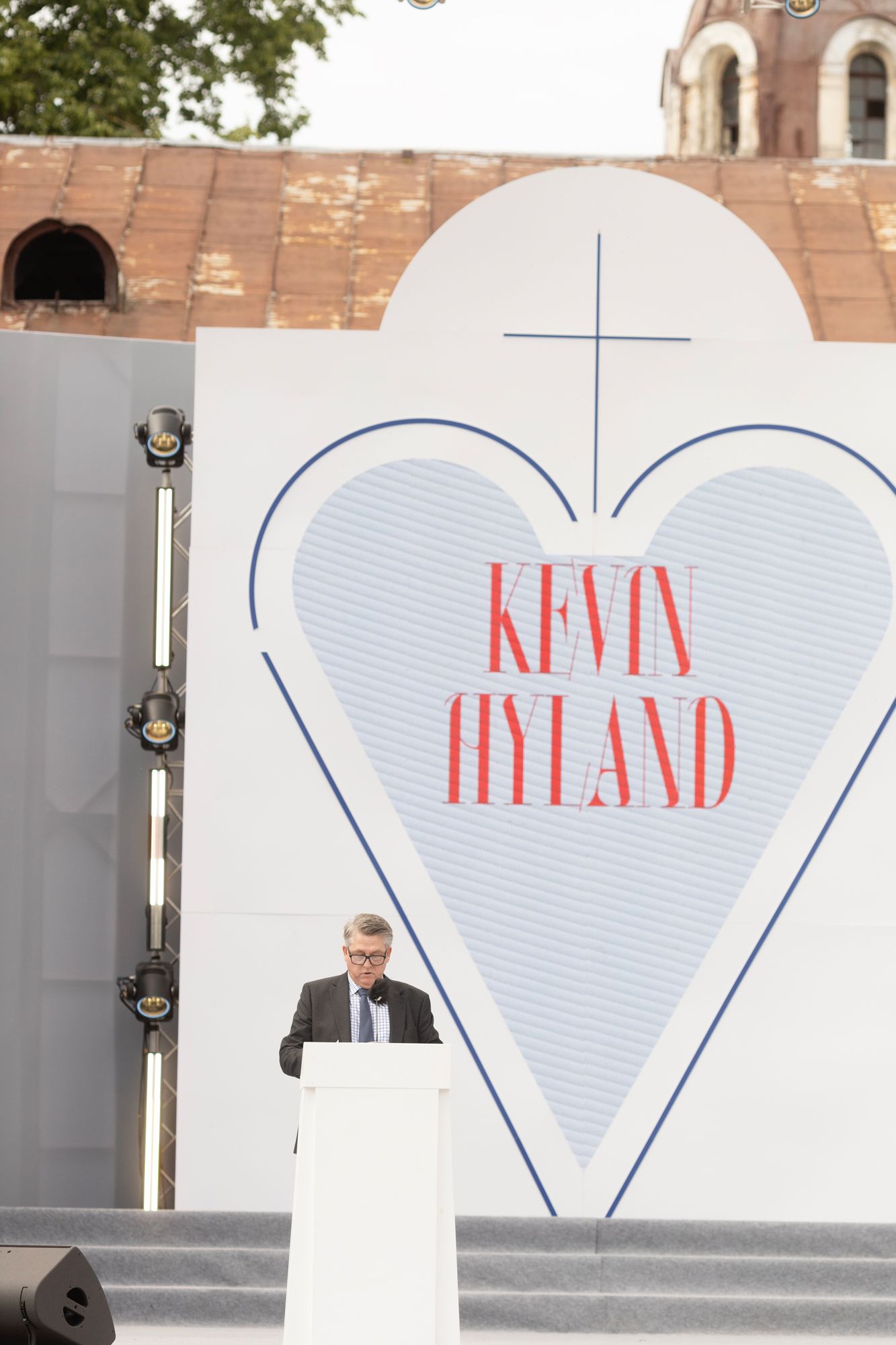
Kevin Hyland, one of the world’s leading advocates against human trafficking and modern slavery, delivered a sobering presentation on the scale of exploitation in today’s world.
Drawing on decades of experience, he described human trafficking as a profound assault on human dignity and one of the defining human rights challenges of our time.
D. Morozovos nuotr.
Citing Church teaching, Hyland emphasized that indifference allows exploitation to flourish. Recalling Pope Francis’ warnings about the “culture of indifference,” he urged participants to reject passivity and respond with compassion and action.
“Indifference must give way to compassion, justice, peace, and a renewed commitment to defend the dignity of every human person.”
He highlighted how trafficking remains hidden in many sectors of modern life and reminded participants that protecting human dignity requires listening to victims, supporting survivors, and addressing the systems that enable exploitation.
Drawing together the teaching of several popes, Hyland emphasized that the fight against human trafficking is ultimately a fight for human dignity, freedom, and peace.
Mercy That Changes Lives
The fifth day of the Congress offered a compelling reminder that mercy is never merely theoretical.
Whether expressed through humanitarian aid in Ukraine, restorative justice in Scotland, parish renewal, or the defense of trafficking victims, mercy becomes visible when it takes concrete form in service to others.
As Archbishop Fisichella reminded participants at the beginning of the day, mercy is not simply one aspect of Christian life: it is “the true name of God’s omnipotence.”
And, as St. John Paul II taught, it remains the force that ultimately “saves the world.”